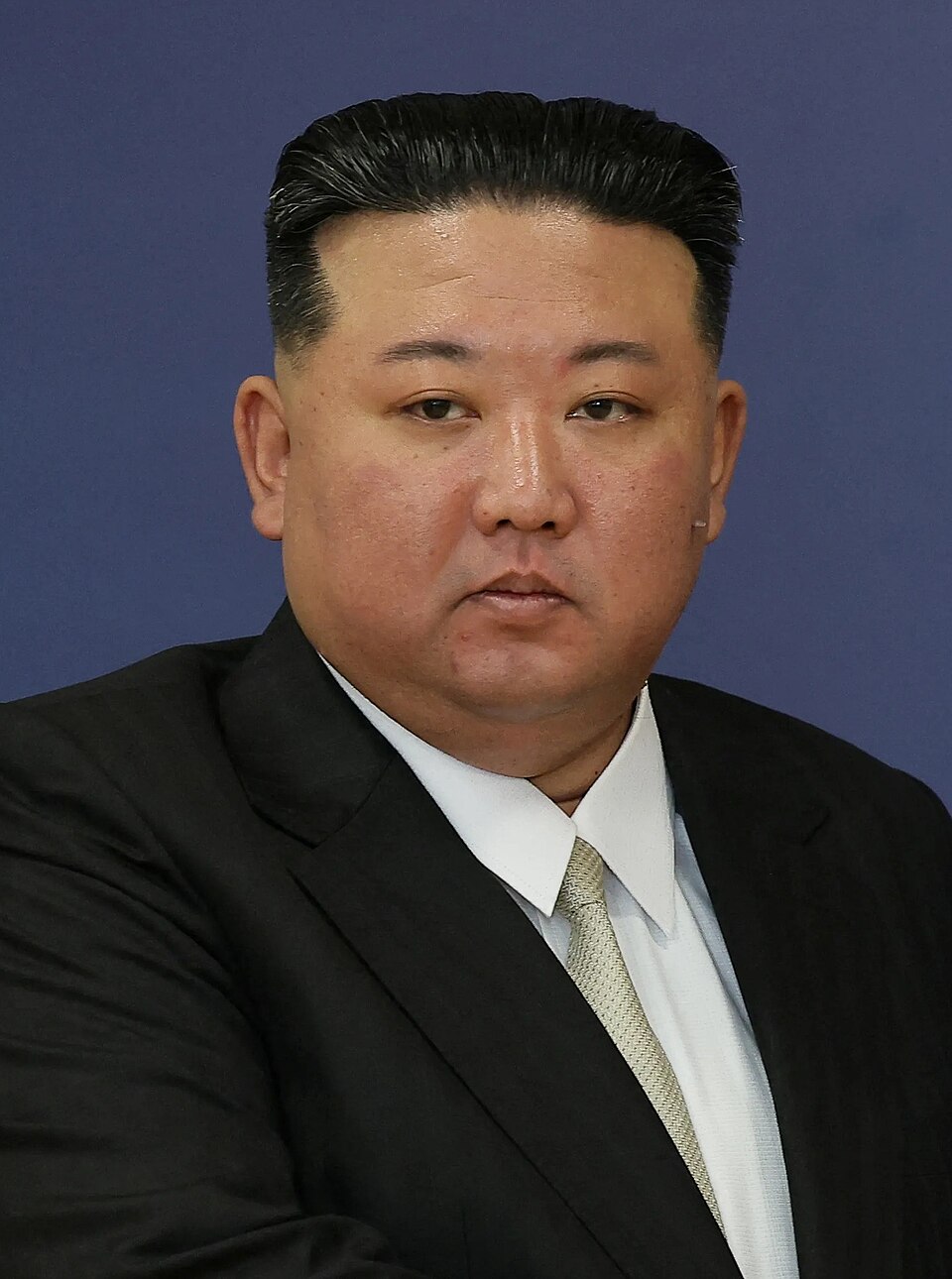
Kim Jong Un's Complex Gambit: Dialogue With US, Annihilation for South Korea?
The latest pronouncements from North Korean leader Kim Jong Un have once again cast a spotlight on the volatile dynamics of the Korean Peninsula and the intricate web of international relations. With a seemingly paradoxical duality, Kim has signaled a conditional openness to dialogue with the United States while simultaneously issuing grave threats of nuclear annihilation against South Korea. This strategic tightrope walk presents a significant challenge for global diplomacy, requiring careful analysis of Pyongyang's intentions and the delicate balance required to navigate this high-stakes environment where the prospect of engagement with the kim jong un us relationship hangs in the air, shadowed by dire warnings for Seoul.
The Conditional Overture: Kim Jong Un's Terms for US Engagement
In a significant address at a rare once-in-five-years gathering, Kim Jong Un laid out his country's terms for improved relations with the United States. His central message was clear: North Korea is prepared to "get on well with the U.S." under specific conditions. The foremost among these is Washington's explicit recognition of North Korea as a legitimate nuclear-armed state. Kim referenced his country's constitutional status, underscoring that for any meaningful dialogue to occur, the U.S. must respect "the present position of our state specified in the Constitution."
Beyond this critical acknowledgment, Kim also demanded that the U.S. "withdraw its hostile policy" towards Pyongyang. This broad demand typically encompasses a range of issues from economic sanctions and military exercises with South Korea to general diplomatic pressure. From North Korea's perspective, such policies are perceived as existential threats, justifying its pursuit of nuclear deterrence. Kim explicitly stated that the prospect of dialogue "depends entirely on the attitude of the U.S. side," placing the onus squarely on Washington to initiate a shift in policy.
Interestingly, this isn't the first time Kim has expressed a willingness to engage, nor is it the first time a U.S. official has responded positively to the idea of talks. In previous years, Kim Jong Un famously held summits with then-President Donald Trump, even remarking that he still harbored "fond memories" of the U.S. leader. At that time, he articulated a similar sentiment: "If the United States abandons its absurd obsession with denuclearizing us, acknowledges reality, and seeks genuine peaceful coexistence, there is no reason for us not to sit down with the United States." Trump, too, expressed openness to further meetings, highlighting their "great relationship." This history underscores that the idea of a kim jong un us dialogue is not unprecedented, though the current conditions represent a more explicit and hardened stance from Pyongyang.
Adding another layer to this complex dynamic, U.S. Secretary of State Marco Rubio, speaking recently, suggested Washington's general readiness to engage in dialogue with hostile nations, stating, "The United States is always prepared to talk to officials from any government that have information to share with us or viewpoints they want to share with the U.S." This statement, while broad, leaves a potential opening for future interactions with North Korea, contingent on how both sides interpret and respond to the presented conditions. For more detailed insights into Kim's specific demands, read Kim Jong Un's US Dialogue Condition: Nuclear Status Recognition.
Annihilation or Amity? The Dual Message to the Koreas
While extending a conditional olive branch to the U.S., Kim Jong Un simultaneously delivered a chilling message to South Korea, explicitly labeling it a "hostile state and eternal enemy." He warned that North Korea is prepared to use its nuclear weapons to "completely destroy" its southern neighbor if provoked or threatened. This aggressive rhetoric marks a dramatic escalation and a stark departure from previous inter-Korean relations, which, despite frequent tensions, often maintained a veneer of hope for eventual reunification.
Kim declared that North Korea would "permanently exclude South Korea from the category of kinship," effectively renouncing decades of official policy and rhetoric that envisioned a unified Korean future. He accused the current South Korean administration of deceit and poor diplomacy, dismissing any attempts at conciliation as insincere. This shift signifies a profound strategic pivot, transforming inter-Korean relations from a complex mix of antagonism and aspirational unity into one of outright, declared hostility.
This dual messaging—potential engagement with the U.S. and outright animosity towards South Korea—serves multiple purposes. It could be an attempt to drive a wedge between Washington and Seoul, weakening the U.S.-South Korea alliance. By demanding nuclear status recognition from the U.S. while threatening South Korea with those very weapons, Kim is asserting North Korea's power and attempting to dictate the terms of engagement on the peninsula. It also likely aims to bolster domestic legitimacy by portraying Kim as a strong leader defending the nation against perceived enemies, both near and far. The world watches closely to see if this olive branch to the U.S. can coexist with the declared belligerence towards South Korea, or if it's merely a more sophisticated form of strategic coercion.
Navigating the Geopolitical Tightrope: Implications for US Policy
Kim Jong Un's latest pronouncements present a formidable challenge for U.S. foreign policy, demanding a nuanced and carefully calibrated response. The core dilemma lies in how the U.S. can balance its interest in reducing tensions and engaging in dialogue with North Korea, against its unwavering commitment to the denuclearization of the Korean Peninsula and its strong alliance with South Korea. Accepting North Korea as a nuclear state, as Kim demands, would represent a significant departure from long-standing U.S. policy and international non-proliferation efforts.
The Denuclearization Dilemma
For decades, the bedrock of U.S. policy towards North Korea has been the complete, verifiable, and irreversible denuclearization (CVID) of the Korean Peninsula. Kim's demand for explicit recognition as a nuclear power directly contradicts this objective. If the U.S. were to acquiesce, it would not only legitimize North Korea's nuclear arsenal but also potentially incentivize other nations to pursue similar weapons, undermining global non-proliferation regimes. Furthermore, it would be seen as a betrayal by South Korea and Japan, key U.S. allies in the region who live under the direct threat of Pyongyang's weapons.
Therefore, the U.S. must consider various diplomatic approaches:
- Conditional Dialogue: The U.S. could agree to talks but maintain its denuclearization objective, perhaps offering incremental sanctions relief or security guarantees in exchange for verifiable steps towards denuclearization, rather than outright recognition of nuclear status.
- Multilateral Engagement: Involving other regional powers like China, Russia, Japan, and South Korea in a coordinated diplomatic effort could increase leverage and present a unified front.
- Strengthened Deterrence: While pursuing diplomacy, the U.S. may also need to reinforce its military posture and commitment to its allies to deter any potential aggression from North Korea. This includes joint military exercises and deployment of advanced defense systems.
The success of any future kim jong un us dialogue will hinge on the U.S.'s ability to find a creative diplomatic solution that addresses North Korea's security concerns without legitimizing its nuclear program or abandoning its allies. It requires a delicate dance between firmness and flexibility, ensuring that any engagement does not inadvertently reward belligerent behavior or weaken the international consensus on denuclearization.
Looking Ahead: The Future of Engagement
The path forward for the kim jong un us relationship, and indeed for stability on the Korean Peninsula, remains fraught with uncertainty. Kim's simultaneous offers and threats create a complex negotiating landscape. While the U.S. has indicated a general willingness to talk, the specific conditions laid out by Pyongyang pose a significant hurdle. Any genuine diplomatic breakthrough would likely require a fundamental shift in approach from both sides – the U.S. perhaps reconsidering the strict interpretation of "denuclearization first," and North Korea demonstrating a verifiable commitment to arms control beyond mere recognition of its existing arsenal.
Key markers to watch for signs of genuine movement include:
- Any softening of Kim's demand for explicit nuclear status recognition.
- North Korea halting or scaling back its missile and nuclear tests.
- The U.S. offering specific, verifiable concessions such as sanctions relief or scaled-down military exercises.
- Increased humanitarian aid or cultural exchanges as trust-building measures.
The role of regional allies and rivals – South Korea, Japan, China, and Russia – will also be crucial. Their collective influence, whether through sanctions enforcement or diplomatic persuasion, could significantly shape the trajectory of future engagements. The complex interplay of these actors will determine whether Kim Jong Un's latest gambit leads to a dangerous escalation or, against the odds, opens a narrow window for renewed, albeit highly conditional, dialogue. For additional perspectives on this delicate diplomatic balance, consider reading North Korea's Olive Branch: Kim Jong Un Signals Shift to US.
Conclusion
Kim Jong Un's latest declarations underscore a calculated strategy to re-define North Korea's position on the global stage. By demanding recognition as a nuclear power from the U.S. while threatening South Korea with annihilation, he has presented a stark and challenging dichotomy to the international community. The potential for dialogue between the kim jong un us remains, but it is heavily conditioned on concessions that directly challenge long-standing American policy and regional security paradigms. Navigating this treacherous diplomatic landscape will require unprecedented resolve, strategic creativity, and a delicate balance to mitigate threats while exploring any genuine pathways to peace on the Korean Peninsula.